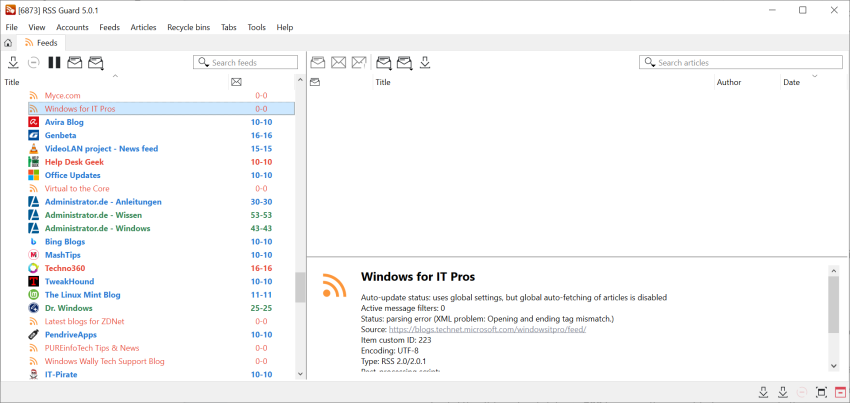
When I updated the RSS feed reader RSS Guard recently to version 5.x on a computer, I found myself without any feed subscriptions after the upgrade. It is a bug apparently that is confirmed by the developer when upgrading from 4.x to the new major version.
Anyway, I picked the very first RSS feed file that I had on the computer and imported it. It was from 2023, not that long ago, but I realized quickly that something was off.
More than half of the subscribed feeds were shown in red after hitting the “update all feeds” button. This meant that they a) were not responding temporarily b) no longer available, or c) that the Feed address changed.
Often decade-old websites, like Raymond.cc, Donationcoder.com, or Ask Windows Wally, came up red. When I checked the addresses manually, I discovered that some of them were gone for good while others have not been updated for years.
One a few showed new articles or content, which meant that the Feed URL had changed or was removed entirely.
Loading an old RSS file teaches us a few fundamental truths about the web’s lifecycle:
- Link rot is the rule: Websites come and go, which is especially true when it comes to independently run sites. These used to thrive a decade ago, but have a hard standing nowadays with traffic flowing to AI content or major players.
- Security migration caused problems: The great migration from HTTP to HTTPS left all the sites behind that did not upgrade. Maybe they were abandoned by their owner prior to the changes, or the owner did not have the technical know-how or desire to upgrade.
- Graveyard of hosted platforms: Platforms like Feedburner were used by millions of blogs in the past. Now, they are in a zombie-like state that is causing more and more problems. Also, restructures of blogs, e.g., Microsoft migrating away from Technet and MSDN, and defunct community projects, all caused disruptions in the field.
- Shift to “walled gardens”: Old RSS feeds represented a decentralized web. People visited dozens of independent niche blogs. Today, many authors have moved to using centralized platforms, such as Substack, Medium, Reddit, or social media. At least some of these make it difficult to subscribe to feeds.
The Internet used to be this cool decentralized place where everyone could start a site or blog and attract an audience. Today, this has shifted towards social media and centralized platforms. The last holdouts feel this shift with every passing year, see it in traffic stats and bank statements.
I’m not saying that ever independent site will be gone in the next five or ten years, but every passing year is going to make it harder for many independent sites out there.
Now You: is there any site in particular that you miss a lot? Feel free to leave a comment down below.