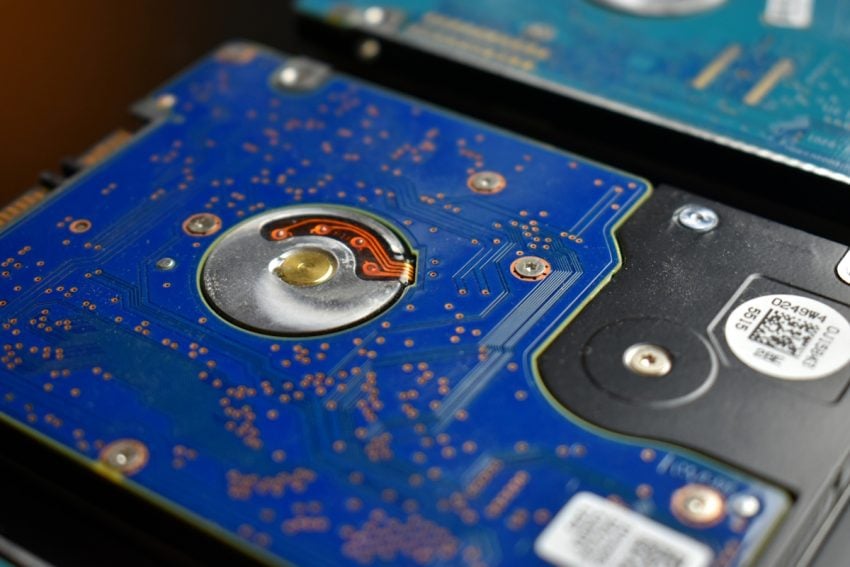
In a few years, hard drives could cross the 100 TB barrier, but at what cost?
Western Digital, now rebranded as WD, lifted the veil on a roadmap that it hopes will shatter the 100 terabyte storage barrier by 2029. Announced at its Innovation Day 2026, the strategy leverages a dual-path approach using both Heat-Assisted Magnetic Recording (HAMR) and Enhanced Perpendicular Magnetic Recording (ePMR) to meet the growing demands of AI.
With 40TB UltraSMR drives already entering customer qualification and a clear engineering path to 100TB+, the industry is finally moving past the incremental gains of the last decade toward a future where massive, high-performance capacity is no longer the bottleneck of innovation.
The next step, 40 TB UltraSMR hard drives, are actually already being tested by two customers according to WD. The company plans to mass produce the hard drives in the second half of 2026.
Engineers run test on the Heat-Assisted Magnetic Recording (HAMR) drive technology, which could see first hard drives on the market in 2027.
WD plans to extend Energy-assisted Perpendicular Magnetic Recording (ePMR) drives to 60 TB and scale HAMR to 100 TB by 2029. Both types of drives are built on common architecture according to WD, which enables “greater manufacturing efficiencies, yields, and a smoother customer product transition”.
The real kicker is that WD says that two new technologies that improve HDD performance significantly and support “workloads previously considered flash-only”.
The company writes:
- High Bandwidth Drive Technology enables simultaneous reading and writing from multiple heads on multiple tracks delivering up to 2x the bandwidth of conventional HDDs without power penalties. The technology has a clear path to scale up to 8x bandwidth gains and is already in customer hands for validation.
- Dual Pivot Technology adds a second set of independently operating actuators on a separate pivot and will deliver up to 2x sequential IO gain within a 3.5-inch drive. This differs from previous dual actuator designs that sacrificed capacity and required extensive customer software changes. Dual Pivot enables reduced spacing between disks, allowing for more platters per drive and higher overall capacity.
WD says that the technologies combined increase sequential IO to 4x overall. The company expects that HDDs with Dual Pivot Technology will become available in 2028.
Closing Words
These drives are largely built for use in data centers and not at home. However, it is likely that consumers will also benefit from an increase in storage. WD did not reveal pricing information but it is clear that these drives won’t be cheap and probably too expensive for the majority of home users out there.
We could definitely use larger capacity hdd’s for storage. We’re getting closer to needing a RAID1 NAS all the time simply because the HDD slots in our cases are almost full.