Chipp.in Tech News and Reviews

Windows, Security & Privacy, Open Source and more

Menu
  • Home
  • Windows
  • Security & Privacy
  • Gaming
  • Guides
  • Windows 11 Book
  • Contact
  • RSS Feed
Menu

Author: Martin Brinkmann

When I was young, I studied German, History and English at Essen University in Germany. I worked in computer support for several years at the time to help other computer users when they ran into issues. Writing started out as a passion project, as I wanted to help more users and not just the ones that I handled in support. This lead to the founding of Ghacks Technology News in 2005. First, as a side-project, but shortly thereafter as a full-time project as the site's popularity exploded. I sold Ghacks to Softonic some years ago, but stayed on as Editor. You can still read my articles on the site. I do publish on Betanews as well. In recent years, I started to write and publish technology books, including my latest book "Windows 11 From Beginner to Advanced", which is available on Amazon. I'm also a freelance writer for the German publisher Gamestar. Chipp.in is my newest project. I want to use it to talk about my book projects, sell my books directly, and write about technology, as this is what interests me.

Netflix plans to double ad-revenue in 2025

Posted on July 18, 2025July 19, 2025 by Martin Brinkmann

Netflix published a new shareholder letter that covers the second quarter of the year. Revenue continues to grow and Netflix is optimistic that the trend continues.

The letter covers monetization on the platform, which may also be of interest to Netflix subscribers.

In short:

  • Netflix plans to double ad-revenue in 2025.
  • Netflix plans to refine its plans and pricing “to improve monetization”.

It does not take a genius to understand how this is going to affect subscribers. Expect another round of price increases, at least in select markets, and more ads on the platform.

While the doubling of ad-revenue will also come from the creation of the company’s ad platform and its development, it is quite probable that Netflix may increase the time ads play per hour for users who are subscribed to the ad-powered plan on the site.

It is interesting to note that Netflix has not seen any negative effects regarding its recent price hikes, introduction of advertisement, increase of ad views, and changes made to the service. Growth continues and most customers seem to stick with Netflix, regardless of what the service does.

Netflix is not the only streaming service that is betting big on ads to fuel growth. Amazon revealed recently that it plans to double ad minutes on Prime Video.

My strategy regarding streaming services remains unchanged. Subscribe selectively for a short period, e.g., a month, or grab a very cheap promotional offer, watch the few shows or movies that are worth watching, and then cancel. For the past decade or so, I have found fewer and fewer reasons for subscribing to Netflix and other streaming services. Main reason? I do not find the shows and movies that they put out appealing or interesting.

What about you? Do you have a subscription to a streaming service? If so, what do you like to watch?

Need another reason why (most) subscriptions are bad for you?

Posted on July 17, 2025July 17, 2025 by Martin Brinkmann

In the past decade, many services and products have switched from a pay-once model to a subscription-based model. Sometimes, you get a choice, say between the pay-once version of Microsoft Office and Microsoft 365. Even then, companies usually tweak the deals to raise the attractiveness of the subscription-based product. Microsoft, for example, does not add new features to the pay-once version of Microsoft Office after release.

Many companies favor subscription-based services. They generate a steady-stream of income, bind the customer to the service, and make it easier to raise the price or change the deal favoring their side. Amazon did the latter when it introduced ads for all Prime Video subscribers and recently announced that more ads are coming.

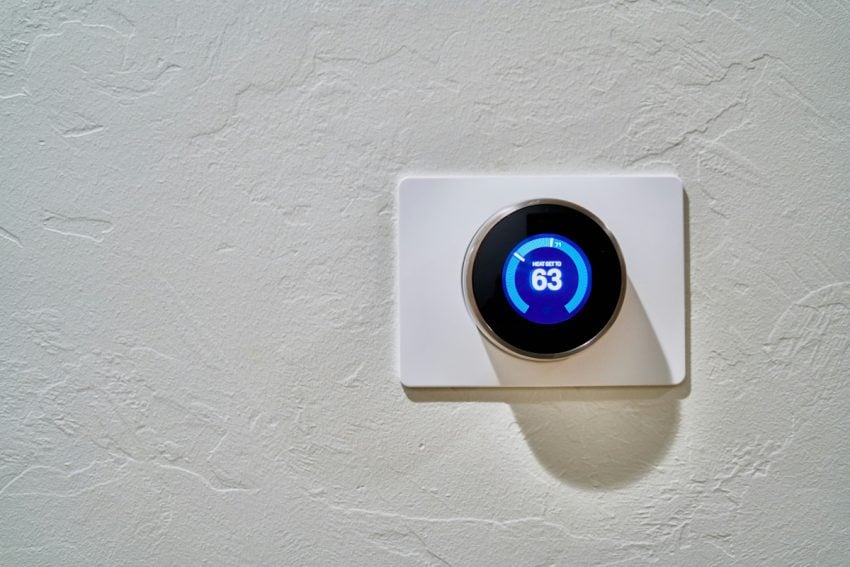
Some companies raise the product of their services almost every year. Google, for example, just announced another round of price increases for Nest Aware.

Google Next devices are smart home products, think thermostats, smoke detectors, smart doorbells or speakers, designed to give home owners more control over their homes, even when they are not at home.

A subscription is required to take full advantage of Next devices. Nest Hub Max, for instance, offers basic motion detection only, if you have no subscription. If you want an upgrade to that, which also includes seen and face alerts, smoke and CO alarm and glass break sound detection, and more, you need a subscription.

Google informs subscribers currently that the price of a subscription is going up again this August. The two products, Nest Aware and Nest Aware Plus, will cost $10 and $20 per month respectively, up from $8 and $15, which customers pay right now.

The last price hike happened in September 2023, when Google raised the price from then $6 and $12 per month to the price that it charges currently.

So, the price went up from $6 to $10 and from $12 to $20 per month in about two years. Is it the last increase? Very unlikely.

With hardware products, it is more challenging to switch, as you invested into the hardware already. While you can cancel a Netflix or Microsoft 365 subscription at any time and without much issues, with Nest and other hardware products, you’d either end up with some dumb bricks or hardware that is less efficient or useful.

The only options that we have is to vote with our wallets. Either do not buy the product in first place or end the subscription, if it gets out of hand. Yes, that could mean ending up with products you bought that will be of little use to you in the future.

Now You: do you have subscriptions currently? If so, which and why? Feel free to leave a comment down below.

Microsoft trials Adaptive Energy Saver, to enable saving mode on devices with plenty of battery left

Posted on July 15, 2025July 14, 2025 by Martin Brinkmann

Mobile devices like Windows 11 laptops use batteries for power. Keeping an eye on the remaining battery is essential to avoid unexpected system shutdowns due to a lack of power.

Modern mobile devices support battery saving modes. These are designed to save battery while the device is idle or in use. Common tweaks include reducing the screen brightness, powering down devices, or limiting background activity.

Up until now, Windows’ energy saver mode was either turned on or off. Microsoft has started a trial to change that.

What is the adaptive energy saver? It is a new, opt-in mode, for Windows 11 devices that have a battery. The feature enables energy saving automatically to conserve energy, even while the battery is not particularly low.

This happens without changing the brightness of the screen and is based “on the power state of the device and the current system load”. So, I assume this means that if the load is light, Windows 11 might turn on energy saving mode for a bit to save energy. Once more resources are required, it may turn off energy saving mode again.

How this actually works remains to be seen. Since this feature is introduced in test builds. expect some tweaking and testing to find out how well it works.

The feature is disabled by default and in testing in the latest insider builds of Windows 11 only (where it may be enabled for some for testing). You find it under Settings > System > Power & battery. There, under Energy saver, set “always use energy saver” to adaptive to use it.

Both Android and iOS support adaptive power or battery options. Some Android devices support adaptive power saving, which dynamically adjusts power-settings like the screen brightness based on user behavior. Apple introduced adaptive power in iOS 26, which makes slight performance adjustments to extend battery life.

Windows 11 Quick Machine Recovery

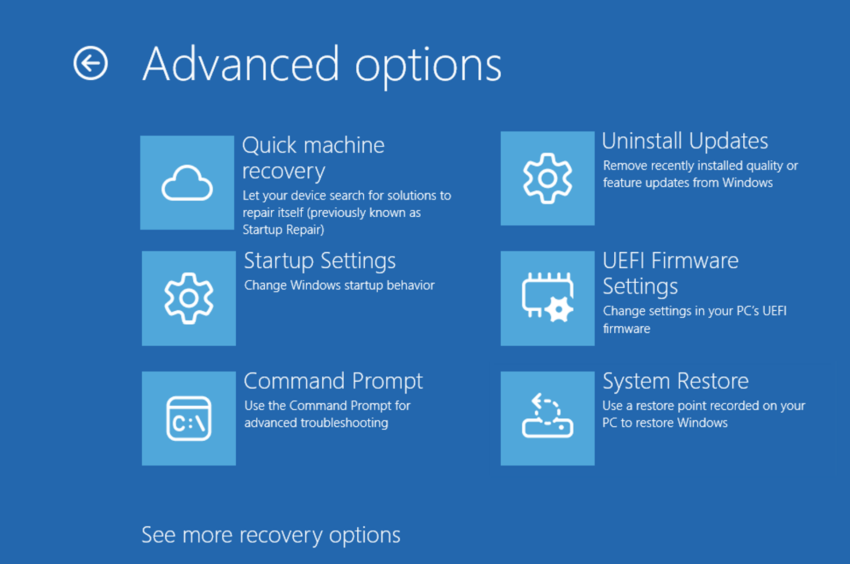
Quick Machine Recovery: automatic Windows 11 device repairs

Posted on July 14, 2025July 14, 2025 by Martin Brinkmann

Quick Machine Recovery is a relatively new feature of Windows 11 that promises speedier troubleshooting of system failures. Announced earlier this year, the feature has now landed in a recent Windows Insider test build of the Canary channel.

What is Quick Machine Recovery? Microsoft describes it as an automated recovery feature that is designed to detect and fix “widespread issues” on devices running Windows 11. Think of it as an automatic repair option baked into the operating system that, Microsoft claims, is fixing issues faster than you.

How does it work? Microsoft says that Quick Machine Recovery kicks in automatically “if a device experiences a widespread boot issue”. It will enter “WinRE”, the Windows Recovery Environment, and connect to the Internet so that “Microsoft can deliver a targeted fix through Windows Update”.

A blog post on the Tech Community website offers deeper insight on how the feature works:

  • Device enters recovery mode: If a Windows 11, version 24H2 device encounters a critical failure preventing normal boot, it enters Windows RE.
  • Network connection established: Windows RE connects to the network using ethernet or Wi-Fi protected access (WPA), ensuring the device can communicate with Microsoft’s recovery services. Future updates will introduce additional networking configurations for broader support.
  • Incident analysis: Microsoft analyzes crash data from affected devices to identify patterns and pinpoint the root cause. If a widespread outage is detected, an internal response team is activated to develop, validate, and prepare a targeted remediation.
  • Remediation rollout: In this initial release, Microsoft will deliver the remediation via Windows Update, adhering to the update policies configured on the device. Microsoft will safely rollout the remediation.

Microsoft claims that the feature is reducing downtime and the need to fix issues manually. According to the initial announcement, Quick Machine Recovery will be enabled automatically on Windows 11 Home devices, once they install the update that introduces the feature.

System administrators may enable the recovery feature on all other editions of Windows 11, including Windows 11 Pro, Education, and Enterprise. Local admins find the setting under System > Recovery > Quick Machine Recovery.

The feature will send crash data to Microsoft when it triggers, which is certainly something to consider before enabling the feature.

Now You: what is your take on this? Useful feature to get Windows 11 devices faster back on track? Feel free to leave a comment down below.

Google introduces Hyping on YouTube, what you need to know

Posted on July 11, 2025July 11, 2025 by Martin Brinkmann

Google announced a new feature for YouTube that it says is “all about helping emerging YouTube channels grow by connecting them with new audiences”. Called “Hype”, it allows any YouTube user to hype videos.

The only restrictions are that the video needs to have been published a maximum of seven days ago and that the publisher has less than 500,000 subscribers. This should apply to most channels on YouTube therefore, especially since it sounds a bit crazy that a channel with 450,000 subscribers is considered emerging.

Anyway, each YouTube user has three hypes per week. You need to be signed in to hype a video and YouTube will show a leaderboard of the “most hyped” videos from the week on the site.

In the future, Google plans to introduce options to purchase hypes. Means, once you run out of your three hypes you can start buying more. Useful for the creators whose videos you push, but also for Google as it will certainly take its share of the price of that.

Google says that hyping pushes videos to regional leaderboards, where they may get more exposure and thus views. In addition to that, hyped videos get a special badge on YouTube. It appears, however, that the amount of hype has no influence on recommendations or search results.

Is it worthwhile then? Probably not. While fans may be able to push videos from a certain creator to the top hype charts of the week, the system seems to benefit larger channels closer to the 500k limit more than smaller ones with just a few users.

The main benefactor will be Google, as users will certainly use the option to buy more hypes to push their favorite creators on the site. Also, the amount of hype a video gets on YouTube says nothing about its quality or usefulness to you.

All in all, it does not sound overly useful and could potentially be just another scheme by Google to earn more revenue on the site.

Now You: what is your take on the new Hype option on YouTube? Cool new feature that sounds useful and could really help smaller channels stand a chance against the juggernauts? Or another cash grab by Google?

KeePass 2.59 Password Manager supports Arm64 on Windows now

Posted on July 10, 2025July 10, 2025 by Martin Brinkmann

KeePass is one password manager that I’m using regularly on Windows machines for password-related activities. It is a well-designed app that runs locally, but you can extend it with all kinds of plugins and install compatible programs and apps for other operating systems.

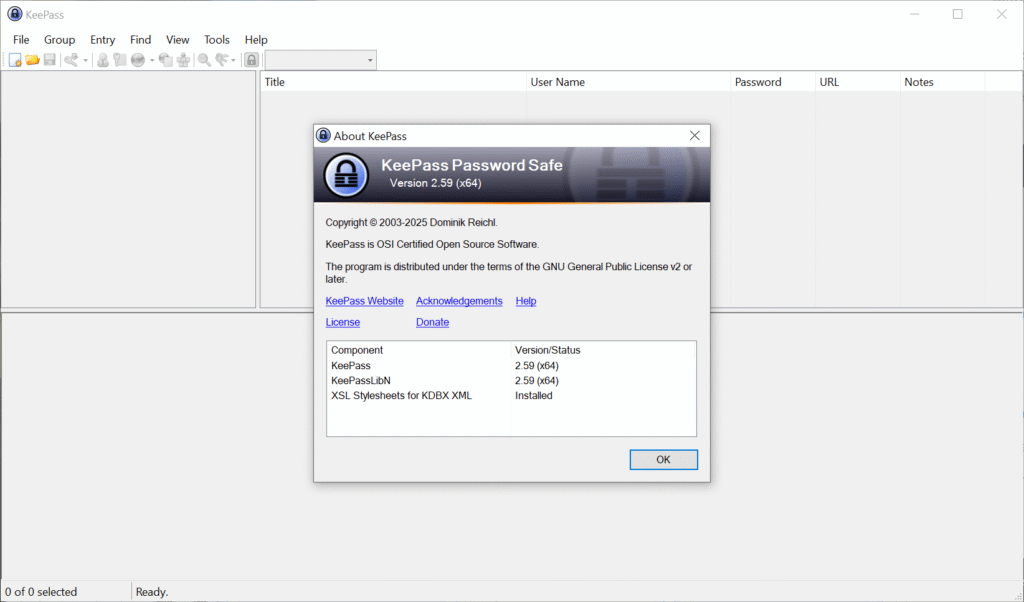
A new version of the password manager is now available. KeePass 2.59 is the second release of the year 2025 and it introduces quite a few welcome improvements and changes. First and foremost, if you run Windows on an ARM64 device, like the latest Microsoft Surface Pro devices, then you may install and use the password manager on that device now as well. KeePass 2.59 is therefore the first version of the password manager that supports all architectures that Windows supports.

KeePass 2.59 interface

KeePass 2.59 introduces native implementations of AES-KDF and Argon2 on Windows systems, promising a breathtaking 30-50 times speed increase on systems on which the native support library was not available or disabled. Encrypting and decrypting databases that use the AES algorithm should now also be faster.

Another new feature is a new import and export module for the KeePass KDB-database on Arm64 and Unix-like systems. You find the new option under File > Export in the main KeePass interface. Exports support the default user name and database color now. The root group is now also exported, according to the release notes.

Other than that, support for opening URLs from within KeePass now supports the private modes of the browsers Maxton, SeaMonkey and Yandex, next to the already supported browsers. Also new is that some links are now clickable on Unix-like systems, which may improve handling of them, as you no longer have to use copy and paste for that anymore.

You can check out the remaining changes on the official website. They include several improvements and optimizations for the most part.

Existing users may run the installer to update KeePass to the latest version. A new KeePass 2.59 portable edition is also available for those who prefer it.

Now You: which password manager do you use and why? Feel free to share your thoughts on it in the comment section below.

Chrome

Security researchers discovered malicious Chrome extensions with more than 2.3 million combined installs

Posted on July 8, 2025July 8, 2025 by Martin Brinkmann

Browser extensions can be very useful. They may help you block ads and other unwanted content, download content from websites, enhance online services, or introduce AI features that you really want to use in the browser.

However, reports about malicious extensions for Google Chrome, and thus all other Chromium-based browsers, appear online in regular intervals. Security is not perfect and users may fall pray to malicious extensions not only on third-party sites but also when they browse the Chrome Web Store.

Security researchers at Koi Security discovered a coordinated malware campaign of 18 extensions for Google Chrome, Microsoft Edge, and other Chromium-based browsers that had over 2.3 million users.

The extensions, among them Color Picker, Eyedropper — Geco colorpick, Free Weather Forecast, or Unlock TikTok, were fully functional according to the developers. These were not “thrown together in a weekend” and obiously scam, but “carefully crafted trojan horses”.

Color Picker, for example, provided color picking functionality. It must have done an okay-job at that, as it had a rating of 4.2 of 5 on the Chrome Web Store, over 800 ratings, and more than 100,000 users.

Interestingly enough, several of the extensions were listed as “featured” on the store, which meant that Google promoted them to users who visited the Store. It is very likely that this gave the featured extensions a significant boost, more eyes on them, more downloads.

A Reddit developer observed an increase of impressions of almost 300 percent after the extension got the coveted featured badge on the Chrome Web Store. While the percentage may vary, it is without a doubt pushing installs.

Browser Hijacking

The extensions provide users with functionality that they claim, but they also run malicious tasks in the background according to Koi Security.

The malware monitors every page you visit, submits it to a remote server along with your unique tracking ID, and may receive redirect URLs from the server.

The malware group introduced the malicious code sometime after the extensions were launched on the Chrome Web Store. The fact that browser extensions are designed to update automatically most of the time helped them. Users did not have to click on anything or fall pray to a sophisticated phishing or social engineering attack to get the malware on their devices.

All they did in the beginning was install a perfectly harmless and working extension for the browser. The malware came later.

Koi Security reported the malware extensions to Google. At the time of writing, some are still available on the Store.

Here are the names and unique IDs, so that you can check them against the installed extensions:

Chrome:

kgmeffmlnkfnjpgmdndccklfigfhajen — [Emoji keyboard online — copy&past your emoji.]
dpdibkjjgbaadnnjhkmmnenkmbnhpobj — [Free Weather Forecast]
gaiceihehajjahakcglkhmdbbdclbnlf — [Video Speed Controller — Video manager]
mlgbkfnjdmaoldgagamcnommbbnhfnhf — [Unlock Discord — VPN Proxy to Unblock Discord Anywhere]
eckokfcjbjbgjifpcbdmengnabecdakp — [Dark Theme — Dark Reader for Chrome]
mgbhdehiapbjamfgekfpebmhmnmcmemg — [Volume Max — Ultimate Sound Booster]
cbajickflblmpjodnjoldpiicfmecmif — [Unblock TikTok — Seamless Access with One-Click Proxy]
pdbfcnhlobhoahcamoefbfodpmklgmjm — [Unlock YouTube VPN]
eokjikchkppnkdipbiggnmlkahcdkikp — [Color Picker, Eyedropper — Geco colorpick]
ihbiedpeaicgipncdnnkikeehnjiddck — [Weather]

Edge:

jjdajogomggcjifnjgkpghcijgkbcjdi — [Unlock TikTok]
mmcnmppeeghenglmidpmjkaiamcacmgm — [Volume Booster — Increase your sound]
ojdkklpgpacpicaobnhankbalkkgaafp — [Web Sound Equalizer]
lodeighbngipjjedfelnboplhgediclp — [Header Value]
hkjagicdaogfgdifaklcgajmgefjllmd — [Flash Player — games emulator]
gflkbgebojohihfnnplhbdakoipdbpdm — [Youtube Unblocked]
kpilmncnoafddjpnbhepaiilgkdcieaf — [SearchGPT — ChatGPT for Search Engine]
caibdnkmpnjhjdfnomfhijhmebigcelo — [Unlock Discord]

7-Zip 25.000

7-Zip 25.00 improves performance and fixes security issues

Posted on July 7, 2025July 7, 2025 by Martin Brinkmann

7-Zip is a popular cross-platform open source program to pack files and to unpack archives. It is a lightweight alternative to heavier archiving programs and the built-in Windows functionality, that is significantly slower in all benchmarks.

7-Zip 25.00 is now available. You can download the latest version from the official project website or from its Sourceforge repository. As always, just install the new version over the other to upgrade the installation to the latest version.

Tip: check the installed version by starting 7z-Zip on your system and selecting Help > About 7-Zip from the menu at the top.

This is the first release of 2025. The changelog lists several performance improvements for various supported tasks.

Here is the overview:

  • The bzip2 compression speed was increased by 15-40%
  • The deflate (zip/gz) compression speed was increased by 1-3%.

The Windows version of 7-Zip supports more than 64 CPU threads now furthermore for “compression
to zip/7z/xz archives and for the 7-Zip benchmark”. This could improve the performance on Windows systems.

Apart from the mentioned performance improvements, the changelog lists that “some vulnerabilities” were fixed in the latest version. The changelog does not provide any details on those vulnerabilities. Since it is unclear how severe the fixed vulnerabilities are, it is recommended to upgrade to the new version of 7-Zip immediately to protect your system from potential attacks.

Xbox

Here is my take on Microsoft’s Xbox strategy going forward

Posted on July 5, 2025 by Martin Brinkmann

Microsoft’s current generation Xbox platform is lagging behind the Japanese competition in terms of sales. Nintendo and Sony sold more than twice the number of consoles each.

Xbox performs badly, even though Microsoft spent more money on acquisitions of gaming studios than ever before. Now, Microsoft announced another round of layoffs, many of which are hitting Xbox employees or employees in gaming studios that produce games for Xbox.

Is that the preparation of Microsoft’s exit from consoles? Write off the money and move on to bigger things?

Microsoft confirmed the next generation of Xbox consoles already and revealed vital information. While the next Xbox may not be a traditional Xbox console anymore, it could give Microsoft’s ailing games business the push it needs.

Here is what might happen: Microsoft announced plans to introduce third-party games stores to Xbox. It would not really make much sense to introduce these stores without options to play games from these stores.

The next Xbox could therefore be a PC in console format, like Valve’s fabled Steam Machine. Connect to a TV, play your favorite PC games. Icing on the cake would be backwards compatibility with classic Xbox games, which Microsoft should and probably will add support for.

With PC suddenly on board, Xbox would support more games than ever produced for consoles up to this date. Even if the system would support just a few major stores, say Steam, Gog, the Microsoft Store, it would enable support for tens of thousands of games on day one. Even better, if you are a PC gamer already, you could connect your accounts to Xbox to play the games you bought already.

With massive games support, first-party titles become less of a focus to sell the next generation console. While a next generation Halo might still help sell the system, it would probably help as much as blockbuster PC games that would suddenly all be available on the Xbox system as well.

To be fair, Microsoft did not release that many Xbox exclusive games since the launch of this Xbox generation. Some, like Starfield, were console-exclusive but launched on PC as well.

So, to sum it up. Next Xbox could be powered by Windows that also supports previous generation Xbox games. It would be the end of true Xbox gaming though.

Question is, would you buy it? What would Microsoft have to do to get you to buy it? Let me know in the comments below.

IT Crowd Turning it off and on again

Have you tried turning it off and on again? Microsoft posts fix for OneDrive Search issue

Posted on July 4, 2025July 4, 2025 by Martin Brinkmann

One of the most famous lines of the British comedy series IT Crowd, a show revolving around two IT support geeks and a manager who does not have a clue about “computers”, is “Have you tried turning it off and on again”.

When the crew gets a support call, it is this question that they ask first. Most of the time, it works and the situation is resolved.

If you used computers before, you know that turning the device off and on again can indeed fix issues that you experience. Not all of course. There is a logic behind that, as restarting a system does a number of beneficial “things” in the background that may help resolve issues. Among them terminating apps and thus freeing up memory and potentially CPU performance.

Microsoft’s IT Crowd moment

Last month, Microsoft confirmed that users could run into problems when searching files on OneDrive, the company’s cloud storage service. While the files were still there, OneDrive would return no files in search and show a blank results page instead.

Neowin reports that Microsoft fixed the issue in the meantime. OneDrive users are encouraged to update the client to the latest version to apply the fix.

Microsoft, in the meantime, posted a workaround for affected users. As you may have guessed already, it recommends refreshing the browser or turning the mobile device off and on again.

So, if you are experiencing this issue, have you tried fixing it by turning it off and on again?

  • Previous
  • 1
  • …
  • 13
  • 14
  • 15
  • 16
  • 17
  • 18
  • 19
  • …
  • 69
  • Next

Support This Site

If you like what I do please support me!

Any tip is appreciated. Thanks!
  • March 3, 2026 by Martin Brinkmann Google to release two Chrome Stable releases per month
  • March 2, 2026 by Martin Brinkmann Don't Bother with Windows 11's new Speedtest feature
  • February 27, 2026 by Martin Brinkmann Warning! That laptop on Amazon? It comes with temporary storage
  • February 26, 2026 by Martin Brinkmann "If your printer works today, it will continue to work": Microsoft corrects previous announcement
  • February 25, 2026 by Martin Brinkmann YouTube Premium Lite subscribers get background playback and downloads with a big "but"

About

We talk, write and dream about Technology 24/7 here at Chipp.in. The site, created by Martin Brinkmann in 2023, focuses on well-researched tech news, reviews, guides, help and more.

Legal Notice

Our commitment

Many websites write about tech, but chipp.in is special in several ways. All of our guides are unique, and we will never just rehash news that you find elsewhere.

Read the About page for additional information on the site and its founder and author.

Support Us

We don't run advertisement on this site that tracks users. If you see ads, they are static links. Ads, including affiliate links, never affect our writing on this site.

Here is a link to our privacy policy

©2026 Chipp.in Tech News and Reviews