When I was young, I studied German, History and English at Essen University in Germany. I worked in computer support for several years at the time to help other computer users when they ran into issues.
Writing started out as a passion project, as I wanted to help more users and not just the ones that I handled in support.
This lead to the founding of Ghacks Technology News in 2005. First, as a side-project, but shortly thereafter as a full-time project as the site's popularity exploded.
I sold Ghacks to Softonic some years ago, but stayed on as Editor. You can still read my articles on the site. I do publish on Betanews as well. In recent years, I started to write and publish technology books, including my latest book "Windows 11 From Beginner to Advanced", which is available on Amazon.
I'm also a freelance writer for the German publisher Gamestar.
Chipp.in is my newest project. I want to use it to talk about my book projects, sell my books directly, and write about technology, as this is what interests me.
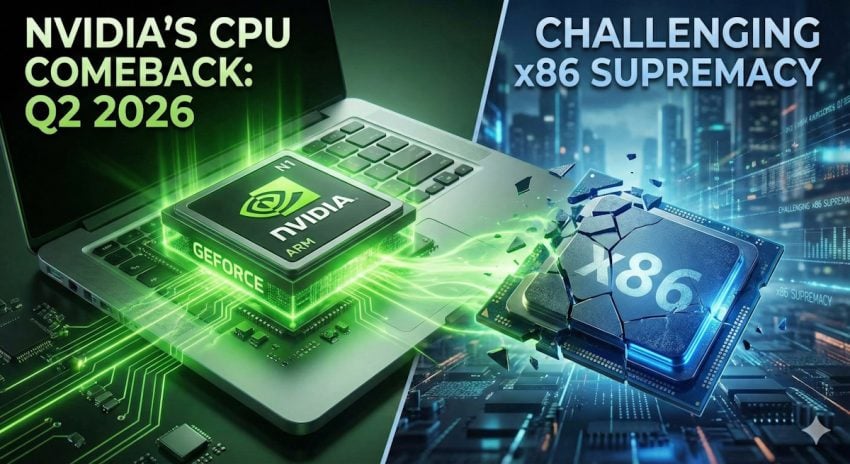
Intel’s and AMD’s nightmare has a release date. According to new reports, NVIDIA will debut its high-performance N1 and N1X consumer processors by Q2 2026, marking the company’s aggressive entry into the Windows laptop market.
The launch would end a long period of rumors and sets the stage for a major showdown, as NVIDIA attempts to replace traditional x86 CPUs with its own custom ARM architecture.
The report comes from the usually well-informed DigiTimes. Nvidia plans to release its first Nvidia N1X chip in notebooks in the first half of 2026 according to the report. DigiTimes reports further, that Nvidia has plans to release a second generation chip — N2/N2X — as early as the third-quarter of 2027.
Nvidia will follow the same business strategy that it has implemented for its graphics cards. It will create a reference design, which other manufacturers may customize.
It has been over a decade that Nvidia released a processor for Windows PCs. Back in 2013, Nvidia released the Tegra 4 processor for the Microsoft Surface 2 device, which ran on Windows RT 8.1.
We all know how this worked out. Windows RT was a colossal failure for Microsoft, in large parts due to its locked-down nature. Microsoft limited apps to the Windows 8 Store for the most part, which meant that users could not run any traditional Windows desktop apps on RT devices.
Windows on ARM has evolved significantly since the RT days. One of the main advantages of Windows 11 on ARM is support for classic Windows programs through emulation.
However, while Windows on ARM offers advantages in some fields, it does lag behind in others. Notably, it is gaming and legacy compatibility — think older PC hardware — that ARM has problems with.
For NVIDIA, the N1 launch represents unfinished business. More than a decade after the Surface 2 and the rocky Windows RT era, the company is returning to a landscape that has fundamentally changed.
The ultimate winners here are likely the consumers, as NVIDIA could provide the high-performance push that Windows on ARM needs to finally thrive. And while predicting the death of the x86 PC is premature, it is certain that Intel and AMD will be watching this release with bated breath.
Now it is your turn. Are your main systems still powered by AMD or Intel hardware, or do you use some with ARM processors already? Feel free to leave a comment down below.
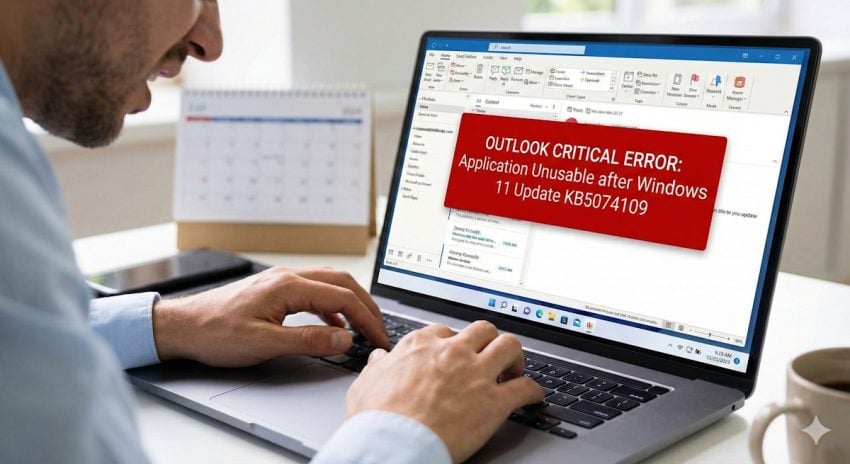
Microsoft’s January 2026 Patch Tuesday update (KB5074109) is causing classic Outlook to hang, freeze, and fail to restart. Find out if your system is affected and how to restore functionality.
What is affected: Outlook classic on Windows does not play with POP accounts currently.
The symptoms: Microsoft mentions hangs and freezes, and also that Outlook won’t restart once it has been closed. The company admits that it does not “have all the symptoms yet”.
Official fix or workaround: None at the time of writing.
Uninstalling the latest cumulative update for Windows 11 resolve the issue according to reports. However, doing so leaves the system open to attacks. One of the patches included in this month’s security update addressed a 0-day issue that is actively exploited.
Go to Settings > Windows Update.
Click on Update history.
Scroll down and select Uninstall updates.
Locate KB5074109 in the list.
Click Uninstall and restart your computer.
Note: You may need to pause updates for a week to prevent Windows from automatically reinstalling it immediately.
If you do so, I recommend that you check the support page for updates to find out when the issue is fixed so that you may install the security update on the Windows machine again.
Other options include using different Outlook apps. Since Microsoft refers to classic Outlook as being broken, the new Outlook app and the Outlook mobile app for Android should continue to work as usually. Both support POP3, but require that the mail account is added to the program.
If switching from POP3 to IMAP is an option, this should also resolve the issue.
Just days after Microsoft released the first security updates for Windows, it is rushing out an out-of-bounds update to fix sign-in failures during Remote Desktop connections
It wouldn’t be a true Patch Tuesday if something didn’t break immediately after. If you spend the last days trying to figure out why Remote Desktop connection suddenly refuse to authenticate, you may be glad to hear that Microsoft acknowledged the issue yesterday.
Even better, the company released an out-of-bounds update on Saturday that addresses the issue.
Essential information
The issue: Microsoft notes that some Windows users “experienced sign-in failures during Remote Desktop connections”. The issue affected several Remote Desktop apps, including the Windows app.
Affected systems: Microsoft released updates for Windows 10 (KB5077796) and Windows 11, versions 24H2 and 25H2 (KB5077744)
Availability: Microsoft releases the update via Windows Update, Microsoft Update, and the Microsoft Update Catalog.
Administrators need to install the out-of-bounds update to fix the issue.
AI component updates included
While the main purpose of the update is to restore Remote Desktop connectivity, Microsoft has added several updated AI components to the update.
This affects the Windows 11 update only, as Windows 10 support is limited. Here is the list of components that are also updated when the patch is installed on a Windows 11 machine.
AI Component
Version
Image Search
1.2511.1224.0
Content Extraction
1.2511.1224.0
Semantic Analysis
1.2511.1224.0
Settings Model
1.2511.1224.0
Closing Words
The RDP issue is not the only one that Microsoft confirmed after the release of the January 2026 updates. Some Enterprise systems running Windows 11, version 23H2 were plagued by a shutdown bug that prevented the systems from shutting down properly.
Microsoft published a workaround — running the shutdown command from run or a command prompt — but no final fix for the issue at the time of writing.
Yesterday, Microsoft acknowledged that some Windows 11 devices are unable to power down after installing the KB5073455 security update.
When users try to shut down or hibernate affected machines, the devices simply restart instead.
Overview: The Secure Launch Shutdown Bug
Who is affected?
Operating system: Windows 11, version 23H2.
Target audience: Mostly Enterprise and IoT editions, as Home and Pro editions are no longer support. The Enterprise editions of Windows 11, version 23H2 will reach end of servicing this November.
Specific hardware: The bug is triggered only on devices with Secure Launch (System Guard Secure Launch) enabled.
Most home users and small to medium-sized businesses should not be affected by the issue.
The workaround
While Microsoft is fixing the underlying issue, it has published a workaround to fix the issue on affected systems.
Users who want to shut down the computer may run the following command from the command prompt: shutdown /s /t 0
Here are the steps:
Open the Start menu.
Type cmd.
Launch the Command Prompt from the search results by selecting it.
Paste shutdown /s /t 0 and press the Enter-key to execute.
Microsoft notes that it has no workaround currently for entering hibernation. The company recommends that users save all work regularly to avoid that work is lost when devices run out of power.
Windows and its Shut Down bugs: a trip down memory lane
Windows had a fair share of shut down related bugs over the years. The most notorious is a bug that plagued Windows users for nearly a decade before Microsoft finally fixed it in late 2025.
When users selected the update and shut down option from the Start menu, Windows would instead restart the system and load the login screen again. PCs would remain turned on until the user recognized the error.
Microsoft explained that the issue was caused by a race condition in the Windows Servicing Stack that caused the shutdown command to get “forgotten” during the update process.
Fast Start woes
Microsoft introduced Fast Start, also known as hybrid boot, in Windows 8. This new feature was designed to make the PC start up faster by using hibernation.
The problem was that older systems did not support this new hybrid state. This caused blue screens on some systems. The systems would reboot automatically to recover and this looked to the user as if shut down was broken.
This is no longer an issue on modern PCs, but on older PCs, system administrators could disable Fast Startup to resolve the issue.
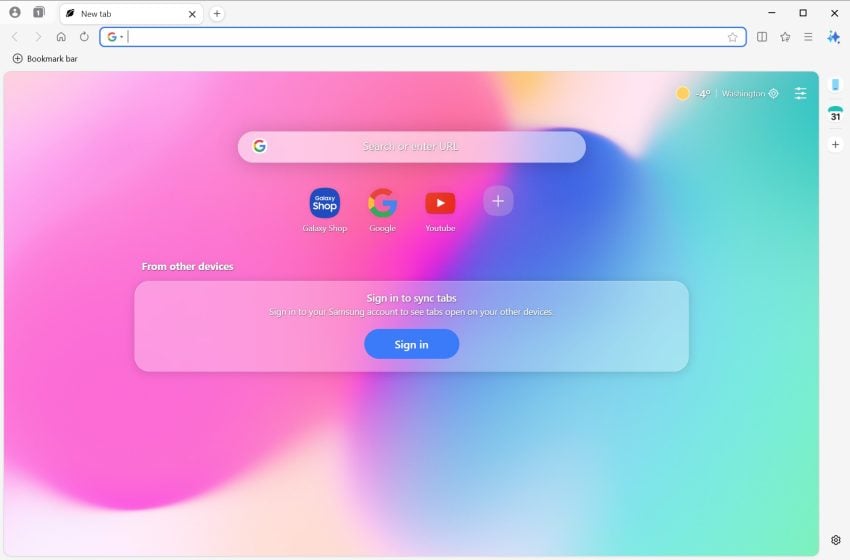
Samsung Internet for Windows is now available without regional restrictions. Here is an overview of the browser and my personal take on it.
Samsung Internet is a long-standing mobile browser that is installed by default on Samsung mobile devices. Samsung announced some time ago that it would expand the browser to the Windows operating system. First launched as a limited beta, it can now be downloaded by anyone.
What is Samsung Internet? The desktop version for Windows is a Chromium-based browser. This means that it shares the foundation with Google Chrome, Microsoft Edge, and many other browsers.
For Samsung, it is an attempt to bridge the gap between Samsung Galaxy mobile devices and Windows PCs. Without support for Windows, Galaxy users had to find another browser to sync data, such as passwords, between their mobile devices and desktop systems.
Since it is based on Chromium, it shares many traits with Google Chrome. It offers similar performance levels and web compatibility, and supports the installation of Chrome extensions from the official web store.
Samsung Internet: unique and noteworthy features
Here is an overview of the browser’s standout features. It should not come as a surprise that most are Samsung-specific.
Integrated ad-blocker and smart anti-tracking functionality.
Samsung account integration, including Samsung Pass. This syncs important data, such as passwords or biometric login data, between devices.
Galaxy AI feature support. The two main features that Samsung Internet for Windows supports right now are the creation of summaries and translations.
A design that mimics the One UI design of the Galaxy phones and tablets.
Is it your next browser (aka, who is it for?)
Samsung Internet offers better out-of-the-box privacy protections than Google Chrome. Users can enable ad-blocking and privacy protections right on start, which gives the browser an edge. Chrome users have to install a content blocker extension to get a similar level of protection.
The explanation for this is simple: Google is an advertising company primarily. It depends on advertising revenue and shipping Chrome with an integrated content blocker would torpedo its business significantly. This is the main reason why Chrome for mobile does not support extensions.
Samsung is a hardware company primarily. It makes money from devices and components that it sells and its focus is to keep users in its ecosystem. Users who are satisfied with the products are more likely to remain customers, that is why Samsung is using privacy as a premium feature in its browser.
Who is it for? Samsung Internet for Windows is designed for Samsung users. Users who already use the mobile version of the browser and work on Windows PCs as well. They benefit from the integration, as they may sync data directly to their Windows devices with the browser without relying on third-party browsers or software.
The browser is a hard sell for anyone else. While it does come with content blocking advantages over Chrome or Edge, it is easy enough to install a content blocker. it is also noteworthy that other browsers, including Vivaldi, Brave and Opera, do come with native content blockers as well.
Artificial Intelligence (AI) has been mostly reactionary up to this point: a user initiates a conversation or asks the AI to do something, and the AI reacts to the input.
It marks a shift towards a deeply integrated AI, including into Android and ChromeOS. Unlike the Gemini app, which is mostly there to provide the user with information or create something for the user, Personal Intelligence is designed to know the user fully to provide a deeply personal experience.
When does it start? It is rolling out for Google AI subscribers in the United States already.
Opt-in or Opt-out? Personal Intelligence is opt-int.
Where can you use it? Across Web, Android, and iOS.
How does it work? The AI creates a local database of a user’s life that is based on emails, photos, calendar entries, messages, and application usage. It pulls data from various sources to know as much as possible about a particular user.
Google reveals that Personal Intelligence runs on Gemini Nano v3, which is optimized heavily for running on the neural processing units of Pixel 9 and Pixel 10 series devices. This allows it to process sensitive data on the device without the data leaving it at any stage of the process.
Unlike Gemini App, which is just a chat window for the most part, Personal Intelligence sees what the user sees on the screen. Furthermore, the AI may act on the user’s behalf with other apps.
Potential benefits for users
The AI you interact with knows as much about your life as you do, at least when it comes to online activity. You can ask it vague questions using natural language.
Personal Intelligence has capabilities to act on information. It can not only retrieve information, but also use information for actions.
A proactive context that anticipates needs. It may recommend to leave early if it notices that traffic is heavier than usually, knowing where you will be based on calendar entries.
Potential points of criticism
While Google emphasizes that sensitive data remains on the device, giving an AI full access to every pixel on the screen and your entire digital life is problematic, especially considering that Google is an advertising company first and foremost.
It remains to be seen how an all-seeing AI impacts a device’s battery life.
Even with access to personal data, AI may hallucinate, which means that it may return information that does not exist or run the wrong actions on the user’s behalf.
Personal Intelligence is also locked into Google’s ecosystem of apps and services for the most part, as functionality with third-party apps is limited at this point.
Closing Words
With Personal Intelligence, Google is offering an interesting and at the same time frightening proposition: a life that is more and more controlled and managed by AI, and in exchange for that, total access to the life of the user.
For now, users have the key in hand. They do not have to enable Personal Intelligence and when they do not, nothing changes. However, when they do, they will effectively allow Google access to their life, connect the dots, and know more about the user than their closest friends or family members.
I want to hear from you: Is on-device processing enough to earn your trust, or does the idea of Google ‘reading’ your screen still feel like a step too far? Let’s discuss in the comments.
If you were hoping for a quiet start to the new year, Microsoft has other plans.
The January 2026 Patch Tuesday is here, and it marks a heavy start to the year for system administrators. Microsoft has addressed a massive 114 vulnerabilities across its ecosystem, including eight critical flaws and a zero-day that require immediate attention.
While Microsoft released a large number of patches for its operating systems and services, it is CVE-2026-20805 that requires immediate attention. It is an actively exploited zero-day vulnerability in the Desktop Windows Manager (DWM) that is being used by threat actors to bypass security controls.
Add to that a “no-click” remote code execution flaw in Microsoft Office that is triggered by using the preview pane, it is clear that administrators have their hands full in the coming days to address these and others.
Beyond the security fixes, this month also brings some significant housekeeping: Microsoft is officially purging legacy Agere modem drivers from Windows images, marking the end of the road for decades-old hardware dependencies.
Key Action Item: Administrators should prioritize patching CVE-2026-20805 (DWM) immediately, as it is being used in the wild to bypass security controls.
Important Patches
CVE-2026-20805 — Desktop Window Manager Information Disclosure Vulnerability
Security updates and non-security changes. Removes old modem drivers (Agere).
Deep Dive: The Critical Vulnerabilities
While the total count of vulnerabilities is high, administrators may want to focus their attention on three specific issues: a zero-day vulnerability that is exploited in the wild, “no-click” Microsoft Office exploits, and a major issue affecting in Secure Boot.
The Zero-Day: CVE-2026-20805 (actively exploited)
CVE-2026-20805 is an Information Disclosure vulnerability that allows a threat actor to read specific memory addresses from remote ALPC ports. While this does not allow the actors to run malicious code directly, attackers may exploit the vulnerability to bypass Address Space Layout Randomization (ASLR).
This may enable them to create other remote code execution exploits that target system components directly.
The “No-Click” Microsoft Office issue
CVE-2026-20952 and CVE-2026-20953 are use-after-free vulnerabilities that allow remote code execution. The danger comes from the fact that they do not require user interaction for execution.
They rely on preview panes, either in File Explorer or Outlook, to trigger exploits. An attacker would have to get a specially crafted Office document on the user’s computer. When a user views the file in a preview area, for example by selecting it in File Explorer, the exploit triggers.
The Secure Boot bypass
CVE-2026-21265 describes a Secure Boot issue. It is not a bug in code that can be exploited, but a cryptographic expiration issue. Secure Boot certificates issued in 2011 are set to expire later this year.
Installation of this update rotates the certificates ensuring that devices will continue to boot and won’t fail to boot once the old certificates expire.
Significant changes
Microsoft removes drivers for legacy Agere modems from Windows with this update. The modems have not been manufactured for a long time and the main reason for removal is a vulnerability CVE-2023-31096. Instead of patching the driver, Microsoft decided to remove the driver from Windows instead.
The removal affects Enterprise and industrial users for the most part. It can affect point-of-sale terminals or legacy fax servers that rely on Agere modem chipsets. These will no longer work when the update is applied.
A quick check of the Device Manager should reveal whether “Agere Systems” or “LSI” models are used.
WDS Hardening enters first phase
This is only relevant if Windows Deployyment Services (WDS) is used. Microsoft is hardening WDS. The company introduces new event logging and Registry controls to block unauthenticated deployment requests.
Starting this month, logging is enabled. Administrators may enforce the block, but it is not enabled by default. From April 2026 onward, Microsoft plans to enable “block by default”.
Companies that rely on unauthenticated imaging have until April 2026 to switch to authenticated deployment. There is also a new AllowHandsFreeFunctionality Registry key, which enables the old status quo.
First Steps: Your Patch Tuesday Strategy
Patch the Zero-Day issue that is exploited in the wild immediately.
Deploy updates to mitigate the “no-click” vulnerability in Microsoft Office.
Make sure legacy modem hardware is not in use anymore.
Ensure that boot loaders are updated before certificates expire.
Not every monthly browser update feels like a milestone, far from it, but Firefox 147 is an exception to the rule. Released just a moment ago, on January 13, 2026, version 147 of the open source browser is not just another round of bug and security fixes — it is a comprehensive update that crosses some of the oldest items from the community’s wish list.
Whether you are a Linux user who has been waiting for 20 years for a cleaner home directory, a privacy advocate looking for improvements, or an AMD-GPU user who is now benefitting from decreased memory use and improved battery life during video playback.
Here are the five standout features in Firefox 147 that make this update essential.
Closing a privacy loophole in Safe Browsing
Mozilla Firefox uses Safe Browsing from Google for security checks. This checks visited URLs to make sure they are not on a list of dangerous addresses.
Up until now, Mozilla Firefox used V4 of Safe Browsing. Under this system, Firefox downloaded a database of hash prefixes from Google. This list included only the first four bytes of a hash and not the full addresses.
When a Firefox user visited a site in the browser, it compared the first four bits of the site’s hash against the list. If a match was found, it contacted Google servers to verify if the site was on the badlist (bad then), or not (collision, not bad).
The problem here was that Firefox had to contact Google for this. This meant that Google got to see the IP address of the user’s computer and the has prefix of the site.
While local first, it was not fully private because of that.
Version 5 makes a shift to Oblivious HTTP. This adds a third-party server between the browser’s request, and thus a user’s IP address, and the Google server. The third-party server sees the IP address of the user, but only the encrypted hash that is submitted.
Google on the other hand sees the hash, which it can decrypt, but not the user’s IP address.
Site isolation support in Firefox for Android
Site isolation was introduced in late 2021 for desktop versions of the Firefox browser. The main idea was to load each site in its own separate process to avoid certain forms of attacks or privacy issues.
Now, almost four years later, Mozilla is introducing site isolation on Android. Apart from improving security, site isolation should also improve the stability of the Firefox browser on Android.
Under the old system, a crash of a website could take down other tabs or even the whole browser. With site isolation in place, only specific tabs associated with the site will crash, while all other sites and the browser itself won’t be affected.
Local network protection in Strict Tracking Protection
Only a few legitimate services require access to local network resources when you browse the Internet. However, sites may abuse the option for certain tracking forms or attacks. Fingerprinting, for example, benefits from identifying other network devices that are connected to the same network.
Starting in Firefox 147, the browser blocks requests from public websites to private RFC 1918 IP addresses, when tracking protection is set to Strict mode. Nothing changes if tracking protection is set to standard mode, which is the default.
As usual, Firefox users have the option to override this for individual sites.
Zero-Copy Video benefitting video playback on AMD GPU systems
Zero-Copy Video is a rendering technique that is designed to eliminate unnecessary transfers of data between system memory (RAM) and the graphics card (VRAM). Introduction of the feature removes one of the biggest bottlenecks when it comes to media consumption, especially on Linux systems.
To better understand the new system, it is important to understand how the old system worked. Or, more precisely, what made the old process inefficient.
When watching a video in the browser, say a 4K video on YouTube, this is what happened:
The GPU decodes the compressed video file.
The browser copies the decoded image into system RAM for the webpage frame.
The compositor copies the image back to the GPU for it to draw the image on the monitor.
Under the new system, the browser is no longer copying the decoded image. Instead, the GPU gives the browser a pointer to the image in its VRAM.
The main effect: The video never leaves the VRAM. This reduces memory (RAM), CPU usage, and PCIe traffic significantly.
XDG Base Directory Support
For the past 20 years, Mozilla has placed the .mozilla folder in the home folder on Linux to store configuration files and data. This has been a major annoyance for Linux users for a number of reasons:
Using the .mozilla folder violated the XDG Base Directory Specification, which says that files should be split into three locations based on purpose, not one location (Configuration, Data, and Cache).
Backup issues, as it was difficult to separate important files, such as configuration files, from trash, such as cache.
Some programs needed special rules to include the Firefox configuration, e.g., third-party sync software.
Performance problems on Enterprise networks that mounted the home directories over a network.
This changes with the release of Firefox 147. Firefox will store config files in ~/.config/mozilla and data in ~/.local/share/mozilla going forward, which resolves the long-standing issue.
Closing Words
You can check out the full release notes of Firefox 147 here. There you also find a link to the included security fixes, which, fix several issues rate high or lower, but none that appears to be exploited in the wild already.
When Microsoft CEO Satya Nadella argued that the discussion surrounding AI should move beyond “slop vs sophistication”, he probably did not have developers in mind that could take this literally.
Fun fact: The dictionary Merriam-Webster coined Slop the word of the year 2025.
Serial developer Belim, known for open source tools such as FlyBy11 or CrapFixer, created WinSlop as a direct response to Nadella’s plea.
What is it? WinSlop is a free open source program for Windows that removes “unnecessary, low-value system components” from the operating system that “consume resources, and reduce user control without providing meaningful benefit” according to the developer’s own description.
If you have used the developers other tools, you know what to expect. WinSlop is a lightweight tweaker for Windows that can turn off unwanted features among other things.
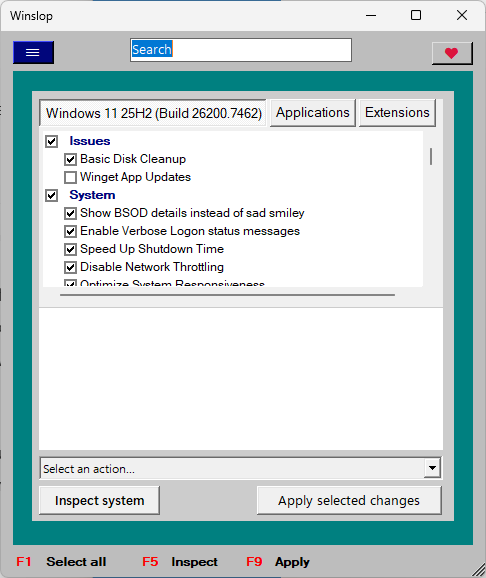
A screenshot of the WinSlop application running on Windows 11.
The tiny program launches directly when you execute it. It separates tweaks into three main tabs. The first displays components of Windows that you may disable by checking and unchecking boxes.
While AI components are a focus, it does not stop there. You can also use it to disable ads in certain places, tame Microsoft Edge, or remove unwanted features from the user interface.
The list is long and you may use the built-in search to find specific options faster.
One interesting option here is the ability to run a system check. This checks all 50 tweaks currently integrated to see whether they have been applied already. To enable a tweak, check the box in front of it. If you do not want a tweak to be applied, make sure its box is unchecked before you hit the “apply selected changes” button or press F9.
Most tweak titles are self-explanatory, but some may require a bit of research. The program lacks tooltips and does not provide additional information on the tweaks.
While it is clear what “Disable Bing Search” does, not all users may know what “Disable Hibernation” or “Optimize System Responsiveness” do. Detailed information would improve the app significantly in this regard. Experienced users may also want to know the exact tweaks that go into the system optimization.
Switching to the apps tab, you are prompted to run a system inspection. WinSlop checks for installed apps and lists apps that it considers bloatware. You may check apps individually to remove them from the system with a click on apply.
The Extensions tab, last but not least, can be used to load the Chris Titus app Windows Toolbox. It offers even more options, such as installing popular apps, tweaking Windows or enabling features such as the Subsystem for Linux. It is a separate app, which I guess is handy to have, but does not really add to the program itself.
Closing words
WinSlop is a handy tweaker for Windows that may get some publicity because its developer references the slop-quote of Microsoft’s CEO directly. However, it does not really add much to the world of tweaking programs that has not been there before.
Yes, it is easy to use and the system checker is nice, but that is about it. Still, if you have not used a tweaker on Windows yet, it is a good program to get started.
When Microsoft released its Windows 10 operating system, it introduced a number of under-the-hood changes. One of these changed how updates were provided to Windows 10 PCs.
Up until the release of Windows 10, Microsoft released individual updates for its systems. While that gave administrators excellent control over the updates, as they could pick the ones that they wanted to install, it meant that a large number of updates had to be installed when an operating system like Windows 7 was installed after a number of years.
Microsoft tried to limit this with the release of Service Packs. These could be installed instead of all earlier updates, which improved the speed and stability of the installation process.
Cumulative updates entered the Windows world in 2015
Microsoft introduced cumulative updates with Windows 10 in 2015. It later introduced the system to earlier operating systems.
The idea was simple: instead of releasing individual updates, Microsoft would release updates that included all previous updates.
Instead of having to install dozens of updates, in some cases hundreds, Windows administrators would simply install the latest cumulative update and they would be done with the updating for the most part.
A new problem emerged: Cumulative updates reduced the number of updates that needed to be installed. However, since they included all previous updates, they grew in size over time.
Surprisingly though, this did not mean that systems downloaded full sized updates each month. Microsoft used a technique called differential downloads, or express updates, to deliver updates to Windows 10 systems.
This meant, that Windows Update downloaded only the update bits that were new. Everything that was installed already was skipped, which increased the updating speed.
The cumulative update model caused four major issues:
While computers only downloaded the update bits they needed, they had to compute which updates they were missing and do a lot of unpacking, verifiying and merging.
Fresh installs or factory resets take a long time. Computers had to download a massive update in the beginning, which would take long to install.
The system caused the WinSxS folder to bloat over time, which could result in storage problems on the main drive.
Storage was still a problem for, mostly, Enterprise customers who hosted and distributed updates from company servers.
Checkpoint updates come to the rescue
Microsoft introduced checkpoint updates in Windows 11, version 24H2. The main idea was to introduce updates regularly that would reset the cumulative updates.
They take a cue from service packs by creating new start points for cumulative updates. This addressed the major issues that Microsoft identified, e.g., instead of computing changes from the very release of the operating system, the processor would only have to do so from the last checkpoint update release.
Updates should install faster on recent versions of Windows 11 because of this. They also deal with the other problems mentioned, by reducing WinSxS storage or providing smaller, less CPU-taxing updates during fresh installs or resets.