Chipp.in Tech News and Reviews

Windows, Security & Privacy, Open Source and more

Menu
  • Home
  • Windows
  • Security & Privacy
  • Gaming
  • Guides
  • Windows 11 Book
  • Contact
  • RSS Feed
Menu

Category: Hardware

Warning! That laptop on Amazon? It comes with temporary storage

Posted on February 27, 2026February 27, 2026 by Martin Brinkmann

I do not think that Amazon is the best place to shop for computer parts, laptops or full PC systems. The main reason for that is price, but there are other factors that should make you pause before you hit the “add to cart” button on the shopping site.

A new issue that has been uncovered by Neowin is that some sellers on Amazon inflate the storage of the devices that they sell. A laptop with 1.1 TB of storage? What an odd number. While it is possible that such a laptop exists, for instance one with a 128 GB solid state drive and a 1 TB platter-based drive, in this case, something different is being sold.

See, these particular sellers add a one year subscription to OneDrive to the laptop, and they add the 1 TB of cloud storage to the total of the laptop’s storage. So, instead of getting a laptop with 1.1 TB of storage, buyers get a laptop with 128 GB of storage and 1 TB of cloud storage.

This should not be a problem for users who know what OneDrive is, as physical and cloud storage is clearly separated in the title and Microsoft’s cloud service is mentioned by name. The system configuration is also displayed correctly, but it can still be problematic for users who hit the buy button too quickly or do not know the difference.

At the very least, it can be very confusing. If you open such a result on Amazon, say this HP 14″ laptop, you find the following title on Amazon:

HP 14″ Natural Silver Ultrabook Laptop, Intel 4-Core CPU, 4GB RAM, 1.1TB Storage (1TB OneDrive and 128GB SSD), HD Display, Windows 11, Microsoft 365 Web Apps

The title says 1.1 TB of storage first before the seller highlights how much of that is physical and how much is cloud-based.

This laptop comes in three configurations: the base model comes with 4 GB of RAM and 128 GB of storage, the most expensive model with 16 GB of RAM and 256 GB of storage. Here, the seller has not added the 1 TB to the laptop’s total.

However, when you scroll to the specs right below, you see 1.1 or 1.2 TB as the hard disk size. The “about this item” section again differentiates the storage between local and cloud storage.

Ultimately, it is a new selling strategy on Amazon that you may want to look out for, if you do buy laptops or PCs there. It is quite possible that Amazon is not the only marketplace where the strategy is used.

Are we finally going to see 100TB+ hard drives?

Posted on February 6, 2026February 6, 2026 by Martin Brinkmann

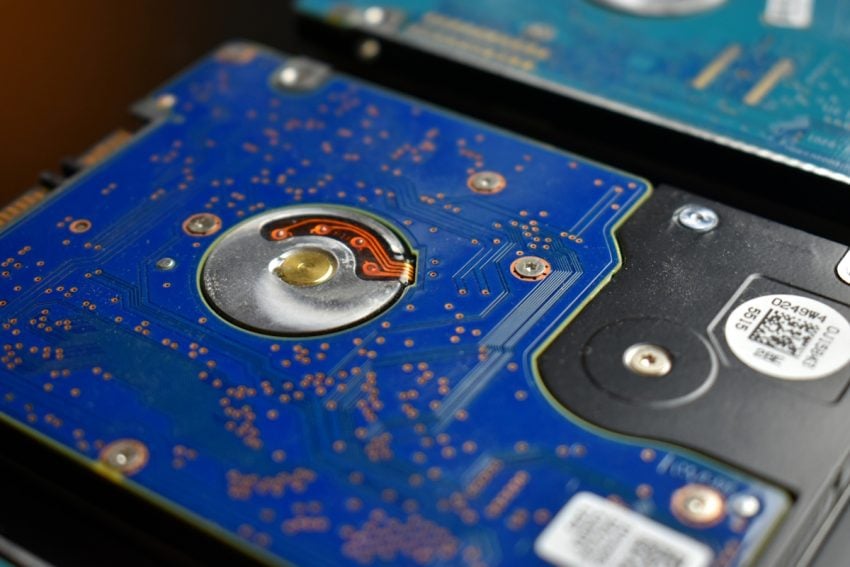
In a few years, hard drives could cross the 100 TB barrier, but at what cost?

Western Digital, now rebranded as WD, lifted the veil on a roadmap that it hopes will shatter the 100 terabyte storage barrier by 2029. Announced at its Innovation Day 2026, the strategy leverages a dual-path approach using both Heat-Assisted Magnetic Recording (HAMR) and Enhanced Perpendicular Magnetic Recording (ePMR) to meet the growing demands of AI.

With 40TB UltraSMR drives already entering customer qualification and a clear engineering path to 100TB+, the industry is finally moving past the incremental gains of the last decade toward a future where massive, high-performance capacity is no longer the bottleneck of innovation.

The next step, 40 TB UltraSMR hard drives, are actually already being tested by two customers according to WD. The company plans to mass produce the hard drives in the second half of 2026.

Engineers run test on the Heat-Assisted Magnetic Recording (HAMR) drive technology, which could see first hard drives on the market in 2027.

WD plans to extend Energy-assisted Perpendicular Magnetic Recording (ePMR) drives to 60 TB and scale HAMR to 100 TB by 2029. Both types of drives are built on common architecture according to WD, which enables “greater manufacturing efficiencies, yields, and a smoother customer product transition”.

The real kicker is that WD says that two new technologies that improve HDD performance significantly and support “workloads previously considered flash-only”.

The company writes:

  • High Bandwidth Drive Technology enables simultaneous reading and writing from multiple heads on multiple tracks delivering up to 2x the bandwidth of conventional HDDs without power penalties. The technology has a clear path to scale up to 8x bandwidth gains and is already in customer hands for validation.
  • Dual Pivot Technology adds a second set of independently operating actuators on a separate pivot and will deliver up to 2x sequential IO gain within a 3.5-inch drive. This differs from previous dual actuator designs that sacrificed capacity and required extensive customer software changes. Dual Pivot enables reduced spacing between disks, allowing for more platters per drive and higher overall capacity.

WD says that the technologies combined increase sequential IO to 4x overall. The company expects that HDDs with Dual Pivot Technology will become available in 2028.

Closing Words

These drives are largely built for use in data centers and not at home. However, it is likely that consumers will also benefit from an increase in storage. WD did not reveal pricing information but it is clear that these drives won’t be cheap and probably too expensive for the majority of home users out there.

Intel’s Nightmare Arrives in Q2: NVIDIA to Launch High-Performance ARM Chips for Windows

Posted on January 20, 2026January 20, 2026 by Martin Brinkmann

Intel’s and AMD’s nightmare has a release date. According to new reports, NVIDIA will debut its high-performance N1 and N1X consumer processors by Q2 2026, marking the company’s aggressive entry into the Windows laptop market.

The launch would end a long period of rumors and sets the stage for a major showdown, as NVIDIA attempts to replace traditional x86 CPUs with its own custom ARM architecture.

The report comes from the usually well-informed DigiTimes. Nvidia plans to release its first Nvidia N1X chip in notebooks in the first half of 2026 according to the report. DigiTimes reports further, that Nvidia has plans to release a second generation chip — N2/N2X — as early as the third-quarter of 2027.

Nvidia will follow the same business strategy that it has implemented for its graphics cards. It will create a reference design, which other manufacturers may customize.

It has been over a decade that Nvidia released a processor for Windows PCs. Back in 2013, Nvidia released the Tegra 4 processor for the Microsoft Surface 2 device, which ran on Windows RT 8.1.

We all know how this worked out. Windows RT was a colossal failure for Microsoft, in large parts due to its locked-down nature. Microsoft limited apps to the Windows 8 Store for the most part, which meant that users could not run any traditional Windows desktop apps on RT devices.

Windows on ARM has evolved significantly since the RT days. One of the main advantages of Windows 11 on ARM is support for classic Windows programs through emulation.

However, while Windows on ARM offers advantages in some fields, it does lag behind in others. Notably, it is gaming and legacy compatibility — think older PC hardware — that ARM has problems with.

For NVIDIA, the N1 launch represents unfinished business. More than a decade after the Surface 2 and the rocky Windows RT era, the company is returning to a landscape that has fundamentally changed.

The ultimate winners here are likely the consumers, as NVIDIA could provide the high-performance push that Windows on ARM needs to finally thrive. And while predicting the death of the x86 PC is premature, it is certain that Intel and AMD will be watching this release with bated breath.

Now it is your turn. Are your main systems still powered by AMD or Intel hardware, or do you use some with ARM processors already? Feel free to leave a comment down below.

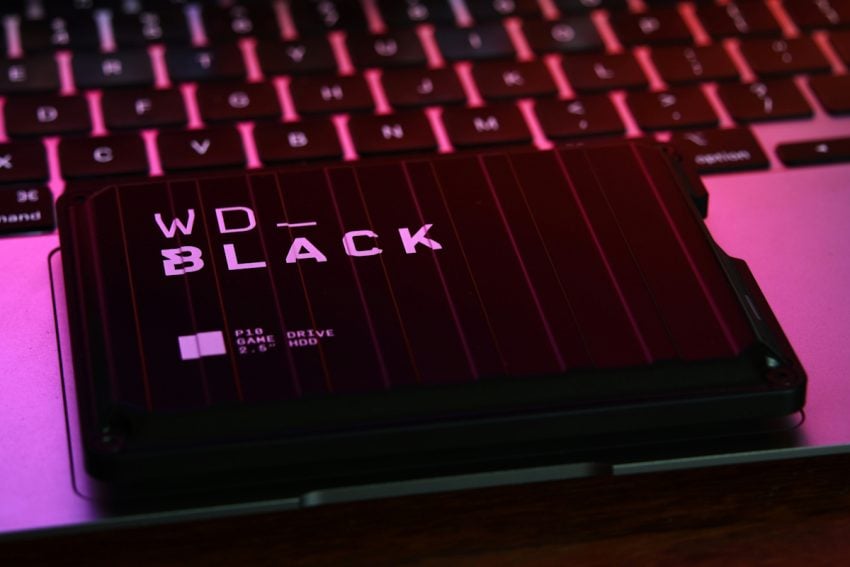
Goodbye WD Black and Blue, Hello (again) SanDisk Optimus

Posted on January 6, 2026 by Martin Brinkmann

Western Digital has been a household name for many years. In late 2023, Western Digital announced that it is splitting into two separate companies. All platter-based hard disk drive products would remain under the Western Digital brand while all NAND Flash memory products would spin off as an independent company.

Today, SanDisk, the company that owns Western Digital, announced that it is reviving the Optimus name to resolve branding problems created by the split.

Good to known: SanDisk used Optimus as a brand name for enterprise products until 2013. The new Optimus is consumer focused, however.

Western Digital Blue and Black products will be consolidated under the Optimus brand going forward.

SanDisk is splitting the different WD hard drive series into three groups intended for different target audiences.

Old WD BrandingNew SanDisk BrandingTarget Audience
WD Blue (SN5000 series)SanDisk OptimusMainstream / Creators
For standard PC builds and light creative work.
WD Black (SN7000 series)SanDisk Optimus GXGamers
High-speed drives for gaming rigs and consoles (PS5).
WD Black (SN8000 series)SanDisk Optimus GX ProEnthusiasts / Pro
Flagship performance (PCIe Gen 5) for workstations and extreme gaming.

Initial capacities range from 512 megabytes to 8 terabytes just like before. SanDisk has not announced any new products at this time, but it is probably only a matter of time before new Optimus products are announced.

Here is how this affects consumers

All warranties for existing Western Digital Blue and Black drives remain valid. However, support will be handled through a new SanDisk support portal.

The first wave of Optimus drives are identical to WD Black and Blue drives. They will have a new packaging to highlight the change, with Western Digital branding gone and a new SanDisk branding taking its place.

Google tests Pixel Upgrade Program that always gives customers the newest Pixel

Posted on December 29, 2025December 29, 2025 by Martin Brinkmann

Ah, the yearly phone update. Manufacturers such as Google, Samsung, or Apple release new mobile phones each year. This means that the phone that you buy today is not the hottest piece of hardware after a (maximum) of one year of usage.

That is a problem for users who always want the latest mobile device in their hands.

Google is testing what it calls the Pixel Upgrade Program in India. Announced on the official Google India blog, it sounds like a good deal on first glance: buy a new Pixel device, meet some requirements, and get future Pixel devices automatically while sending back your old devices.

This ensures, according to Google, that you have the latest and greatest Pixel device in your possession at all times.

Is there a catch? Yes, there is one. Google explains how the program works, and here are the caveats:

  • It is only available for no-cost 24-month EMI (Equated Monthly Installments) plans.
  • You need to buy the phone using credit cards from Google’s official partners Bajaj Finance or HDFC Bank.
  • You start a new EMI plan for each new Pixel device you get.

Between the ninth and fifteenth EMI, Pixel-users become eligible to upgrade. They need to trade the current Pixel device through Google’s partner Cashify. Provided that it “powers on and is free of unauthorized repairs”, an amount equal to the remaining loan balance is credited to the user’s bank account. This can be used to close the original loan.

From there, users need to start a new 24-month plan for the brand-new Pixel device.

ProsCons
Always have the latest Pixel device.Long-term renting, owning only if you make all 24 payments.
Predictable costs.Paying premium for (potentially) underwhelming upgrades
Bonus, e.g., free periods for Google AI Pro or YouTube Premium, restart with each phone.Limited to EMI and two banks.

Whenever a customer trades the old device in, the cycle begins anew. It is identical to a never-ending rent, with the benefit of getting the newest Pixel device each year.

Would I use it, if it would be rolled out worldwide? No, I would not. I do not buy in installments or on credit, and do not need the latest device each year. It may be different for others, who want or need the latest all the time.

What about you? Would you be tempted to join such a program to get the latest Pixel device each year? Feel free to leave a comment down below.

Report claims that Nvidia RTX 5000 video cards have a thermal design flaw

Posted on April 26, 2025April 26, 2025 by Martin Brinkmann

When Nvidia launched the initial batch of RTX 5000 video cards, it received praise for their performance but also complaints about the price. Reports from buyers appeared on various sites shortly thereafter claiming that the cards were getting incredibly hot.

An analysis by Igor’s Lab, a German site focusing on hardware tests, suggests that the excess heat does not come from the graphics processing unit itself but from local hotspots located on the back of the circuit board.

Here are the details:

  • Especially Nvidia RTX 5080, 5070 (Ti) and 5060 Ti appear to be affected.
  • Cards from Nvidia partners, such as MSI, Palit, or PNY are affected, but also cards from smaller manufacturers.
  • Temperatures may rise to 107 degree Celsius in hotspot areas.

The reviewer analyzed the design of the circuit and concluded that it is technically correct and functional. However, “the voltage converters, the vias between the VRM stages and the GPU pads as well as the current-carrying tracks in the circuit board are subject to considerable power losses at certain points, which can lead to temperatures without appropriate heat dissipation that have a lasting negative effect on material integrity and ageing behavior”.

Affected Nvidia cards share a similar layout, which suggests that the issue is not caused by manufacturing defects but by design according to the reviewer. Specifically, a “lack of coordination between the PCB and the cooler design”.

Quick modifications of affected cards resulted in a significant mitigation of hotspots through the installation of “additional thermal head solutions on the back using thermal pads or thermal putty”.

The analysis is well worth a read. If you do not speak German, you may use a translation service to translate the article into another language.

Google Pixel 9 devices

Beyond hardware: these Pixel 9 features launch with the phones

Posted on August 14, 2024August 14, 2024 by Martin Brinkmann

Google announced this year’s Pixel upgrade on its Made by Google event yesterday. As Google puts it, these are the most powerful Pixel devices ever. They are also the most expensive ones.

You find information about the hardware features of the four Pixel devices — Pixel 9, Pro, Pro XL, and Fold — on numerous sites. Check out Android Police’s or Android Central’s coverage, if you are interested in that.

Google’s main blog post on the Keyword website mentions hardware improvements just in passing. Just a few paragraphs that detail improvements over previous Pixel devices.

The majority of text is reserved for software improvements, mostly AI. The clear focus is software, therefore.

Here are the highlights:

Gemini Live — Deeper interactions with Google’s Gemini AI. Available for Gemini Advanced subscribers. Free for one year for Pixel 9 Pro, Pro XL, and Pro Fold buyers (sorry Pixel 9 buyers, no love for your).

Pixel Studio — Is an image generator that uses the “on-device diffusion model” with a text-to-image model that in the cloud. (Not available in all languages or countries, no further info on that).

Pixel Screenshots — Exclusive app for Pixel 9 that makes screenshots searchable using AI. You may later interact with the app to retrieve information. May include links and other information. (Not available in all languages or countries, no further info on that).

Improved Weather app — Google promises “super accurate weather forecasts” and custom AI weather reports. Also more customization options.

Camera improvements — The cameras get several new features and improvements:

  • AI-powered camera experience — Optimizes HDR+, exposure, tone mapping, sharpening, contrast, and more.
  • Super Res Zoom Video — Supports up to 20x super resolution zoom in Night Sight Video or Video Boost. Uses the telephoto camera with “advanced machine learning”. Only available on Pixel 9 Pro and Pro XL.
  • Add Me — Uses AI to merge multiple photos into a single one. One application for this is that you may add the photographer to a scene.
  • Reimagine Magic Editor — Change images using a text box, e.g., by removing objects or people, changing the sky, or placing new objects.
  • Auto frame in Magic Editor — Helps frame a photo that has been taken already.
  • Night Sight in Panorama — Panorama mode is now also available in low-light conditions.
  • Zoom Enhance — This one allows you to zoom in even more using AI. Only available on Pixel 9 Pro, Pro XL, and Pro Fold.
  • Video Boost — upgrades video to 8K resolution.
  • Move anything — Allows you to move objects or people in a photo.

Clear Calling and Call Notes — Clear calling improves the audio quality of calls according to Google. Call Notes on the other hand creates private summaries and full transcripts of phone calls. Everyone is informed about the recording. (only for calls that are at least 30 seconds long. Not available in all languages or countries, no further info on that).

Satellite SOS — known from Apple, this adds an emergency option to Pixel 9 devices to call for help, even when there is no cellular service. (Only available in the U.S., free for the first 2 years).

There you have it, these are the main features that Google announced. Google does not say which of these require Internet connectivity or what data is transferred for the services that require it.

Does this sound interesting to you? Do you plan to buy a Pixel 9 device, or will you skip those? Feel free to leave a comment down below.

Google TV Streamer

Google is replacing Chromecasts with Google TV Streamer boxes

Posted on August 6, 2024August 6, 2024 by Martin Brinkmann

Google unveiled Google TV Streamer today. The box will replace the company’s own Chromecast devices to compete against the likes of Apple TV.

Here are the main details:

  • Retails for $99.99 (€119.99).
  • Google says CPU is 22% faster than Chromecast 4K.
  • Has double the RAM (4 GB) and 32 GB of storage compared to Chromecast 4K.
  • Supports Wi-Fi 5 (ac) and Bluetooth 5.1.
  • Comes with an Ethernet port and HDMI 2.1, which supports 4K HDR at 60fps.
  • HDR10(+), Dolby Vision, HLG, and Dolby Digital(+), and Dolby Atmos supported.

Google says that TV Streamer supports Matter and Thread, and that it comes with Gemini technology. Here, Google says that Gemini may provide “full summaries, reviews, and season-by-season breakdowns of content”.

Ambient mode, another new feature, turns an idle TV “into a work of art”. Integration of Google services allows pulling up photos and videos from Google Photos, using either voice or by typing.

The “biggest Google-Home-Panel” is not controllable with the remove. This allows users to control other smart devices, for instance cameras or door bells. Google-owned Nest support is also available.

Integration with Android is also available, which means that Android users may stream content from their devices directly on the Google TV Streamer connected display.

The not so good

While Google TV Streamer offers better functionality than Google Chromecast devices that came before it, it disappoints in some areas.

Here are the main ones:

  • The processor is just 22% faster than the Chromecast 4K model, which Google released in 2020. It remains to be seen how well it performs.
  • The device supports only Wi-Fi 5.
  • Only 32 GB of storage.

Only tests will show how well the device performs when compared to Apple TV or other premium boxes.

This may be an instant buy for heavy Google users. If you are already invested, say with Android and smart home devices, then you may like the idea of getting another option to control all these devices.

If you just want the best streaming box, this may not be it based on the hardware that you get. All in all, you may want to wait for the initial wave of reviews before you make a buying decision.

Do you own streaming boxes or sticks? If so, which do you use currently and why? Is the Google TV Streamer a box that you are interested in? Feel free to write a comment down below.

Logitech Mouse

Mouse as a Service – Logitech thinking about the “endless mouse”

Posted on July 31, 2024July 31, 2024 by Martin Brinkmann

If you thought that we are at a point where every company under the sun has introduced a subscription-based service, then you may not have heard of Logitech’s idea — Mouse as a service (MaaS), also called the “endless mouse”.

The idea behind endless mouse is simple: create a mouse that buyers may use forever, but link software updates to a subscription plan.

In other words, if you want to keep the software of your mouse up-to-date, you need the subscription plan. Endless mouse therefore does not only mean a mouse that you use until you die, it also means endless money in the pockets of Logitech. Brilliant!

It is arguable if software updates make or break a mouse. There is a chance that Logitech is going to design the mouse in a special way. Take a cue from HP and require Internet connection before the mouse starts working and Logitech can check that the user has a valid subscription.

It sounds like a nightmarish idea. A toned-down variant could be a replacement service. Whenever your mouse dies or misbehaves, you will get a replacement mouse immediately from Logitech.

Logitech is probably not the only company that is trying to come up with ideas to improve revenue by creating new subscription services.

ArsTechnica has the details. The endless mouse is not a product that Logitech is working on currently, but it is discussed there. Once the idea is planted, Logitech could very well test the waters. Ars speaks of a $200 mouse for enthusiasts plus subscription money. Though, the subscription could be used to subsidize the price of the mouse.

Closing Words

Mouse as a Service, or endless mouse, sounds like something that could never work. The real question here is this: what is in it for the user? What advantage does a user have when that specific mouse is bought with that subscription plan in tow?

What does it offer that justifies the price and frequent payments? It cannot just be the mouse’s hardware and technology, as other mouse manufacturers offer similar functionality. This leaves software as the only differentiating factor. Good luck with that.

Why not buy three of four mice that are good for most users and tasks, and be done with that. Sustainability may be an argument for some.

What is your take on this? Would you pay for hardware that is linked to a subscription fee?

Support This Site

If you like what I do please support me!

Any tip is appreciated. Thanks!
  • March 2, 2026 by Martin Brinkmann Don't Bother with Windows 11's new Speedtest feature
  • February 27, 2026 by Martin Brinkmann Warning! That laptop on Amazon? It comes with temporary storage
  • February 26, 2026 by Martin Brinkmann "If your printer works today, it will continue to work": Microsoft corrects previous announcement
  • February 25, 2026 by Martin Brinkmann YouTube Premium Lite subscribers get background playback and downloads with a big "but"
  • February 24, 2026 by Martin Brinkmann Firefox 148.0 is out with its AI kill switch and support for Windows 7 and 8.1 comes to an end

About

We talk, write and dream about Technology 24/7 here at Chipp.in. The site, created by Martin Brinkmann in 2023, focuses on well-researched tech news, reviews, guides, help and more.

Legal Notice

Our commitment

Many websites write about tech, but chipp.in is special in several ways. All of our guides are unique, and we will never just rehash news that you find elsewhere.

Read the About page for additional information on the site and its founder and author.

Support Us

We don't run advertisement on this site that tracks users. If you see ads, they are static links. Ads, including affiliate links, never affect our writing on this site.

Here is a link to our privacy policy

©2026 Chipp.in Tech News and Reviews